
← All sessions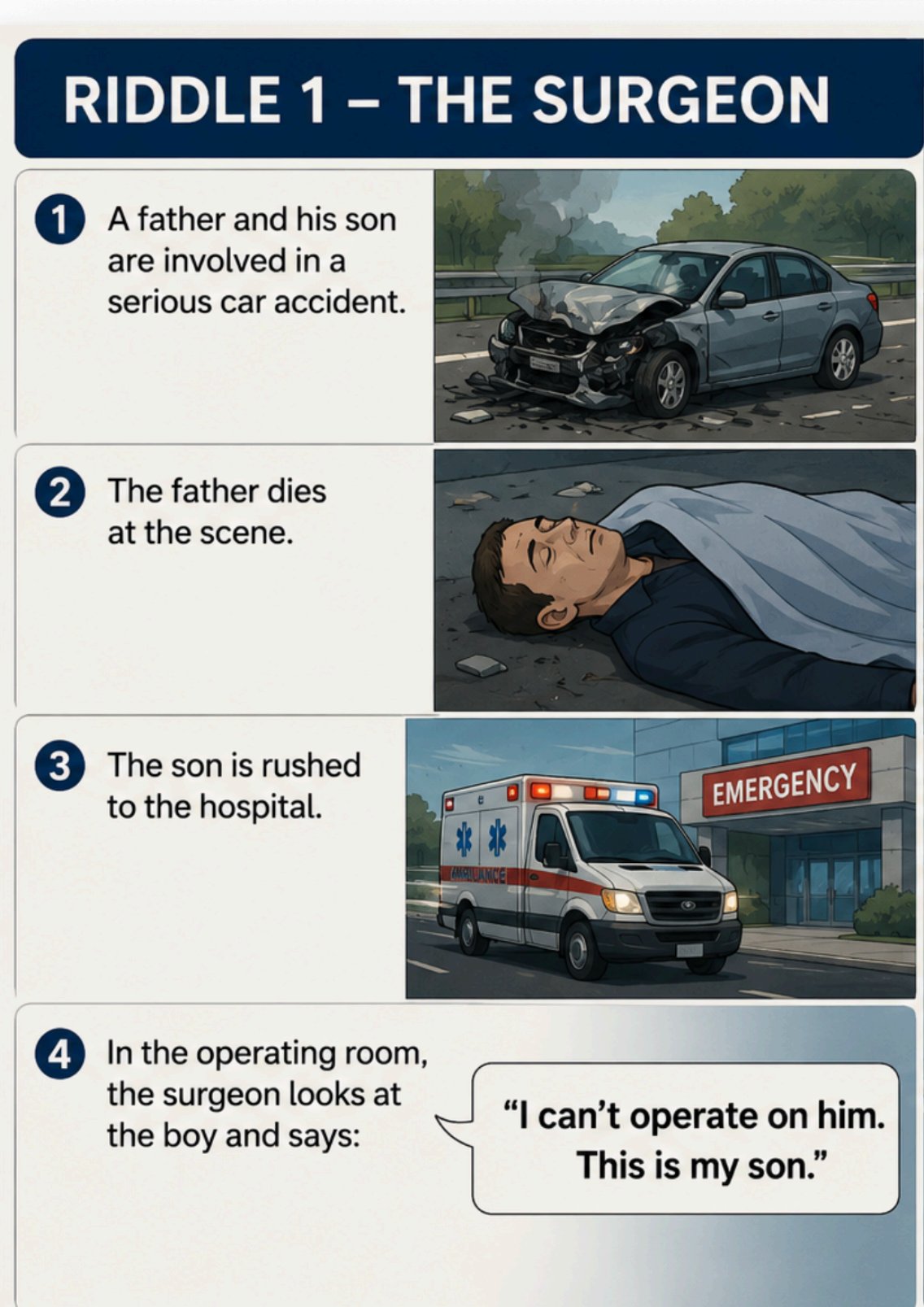


SESSION 03
👂 LSD Communication
Listen · Summarise · Drill
Perception — Why We All See Something Different
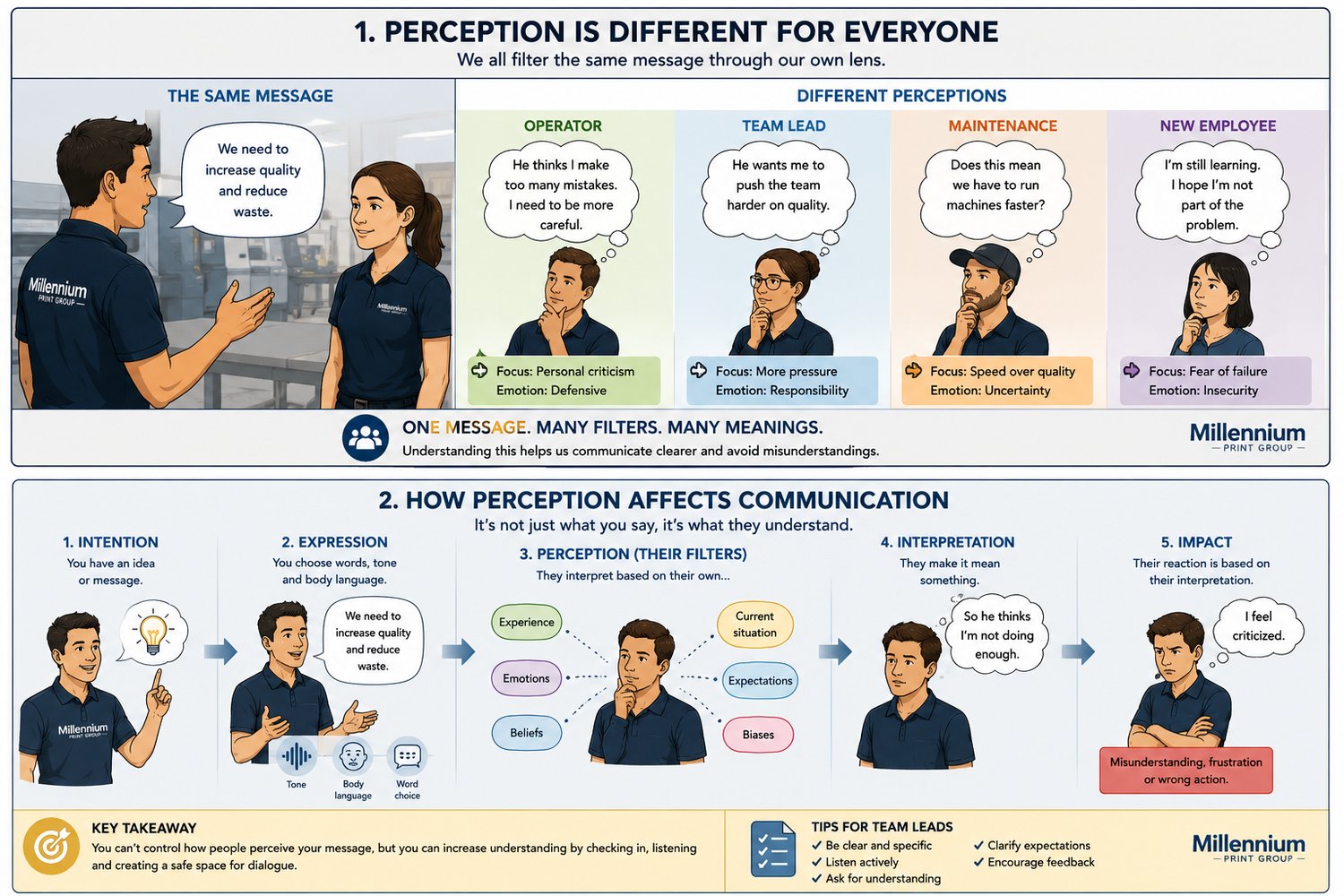
- Perception is the lens you look through — built from your experience, emotions, beliefs, expectations and biases.
- The same message passes through different filters: the operator hears 'criticism', the Team Lead hears 'pressure', the new employee hears 'fear'.
- Your brain fills the gaps automatically with assumptions. That is fast — and often wrong.
- Riddles prove it: if you get stuck, your brain quietly added something that was never said.
- Key: your interpretation is a HYPOTHESIS until the other person confirms it.
Riddles — Try Them Yourself
🧩 Riddle 2 — The ElevatorA boy lives on the 10th floor. Every morning he takes the elevator down and goes to school. When he comes home, he takes the elevator to the 7th floor and walks the stairs for the last three floors — except when it rains: then he rides all the way up to the 10th.
Why?
🧩 The Answers — and What They Teach UsRiddle 1: the surgeon is the boy's MOTHER. Your brain automatically pictured a male surgeon.
Riddle 2: the boy is too SHORT to reach the button for floor 10 — he can only reach button 7. On rainy days he carries an umbrella and uses it to press the right button. Your brain assumed an adult of average height.
That is perception: your brain completes the picture with patterns from experience. On the floor the exact same thing happens — we 'hear' what we expect to hear. That is why checking perception is a core leadership skill.
Perception — Different for Everyone
Basics of Communication — Gathering Information with LSD
- As Team Lead you constantly gather information: how your people are doing, task progress, problems, opinions.
- The tool: LSD — Listen (L) · Summarise (S) · Drill down with questions (D).
- Communication only works when the message is received as intended — and that starts with listening.
- Listening is NOT the same as hearing: it is an active process that takes focus and intentional effort.
- Goal: UNDERSTAND first, then be understood.
Active Listening — 4 Core Elements
- ATTENTION — your brain is faster than the speaker. Use that spare capacity to summarise and connect, not to drift off.
- EMPATHY — step into the speaker's shoes; understand the message from THEIR perspective, not your own.
- ACCEPTANCE — listen without judging first. The moment you build counterarguments, you stop hearing the message.
- RESPONSIBILITY — YOU own comprehension: listen for the feeling AND the facts, and ask clarifying questions.
Summarising — Your Most Underrated Tool
- Show attention: "So you're saying … is important?" — builds trust and openness.
- Check understanding: "If I understand correctly, you feel that…"
- Bring structure: "Three things matter most: first…, second…, third…"
- Guide the conversation: politely rein in excessive talk and refocus on the key points.
- Pitfalls: parroting word-for-word · hijacking the conversation after your summary · sneaking your own opinion into the summary.
Asking the Right Questions
| Question type | Use it to… | Example |
|---|---|---|
| Open | Invite broad answers, reveal thinking | "What do you think about…?" · "How did that go?" |
| Closed | Confirm specific details | "Did you complete the report?" |
| Non-suggestive | Get honest views without steering | "What's your view on this approach?" (not: "Don't you think we should…?") |
| Within their frame | Go deeper on what they said | "You mentioned a challenge — tell me more." |
| Outside the frame | Open a new angle | "What's another issue we should address?" |
❓ Questioning — Common Mistakes• Asking too few questions.
• Asking questions you already know the answer to.
• Suggestive / leading questions.
• Constantly hopping to unrelated topics.
Know what you want to learn, keep the goal in sight, and summarise regularly to stay on track.
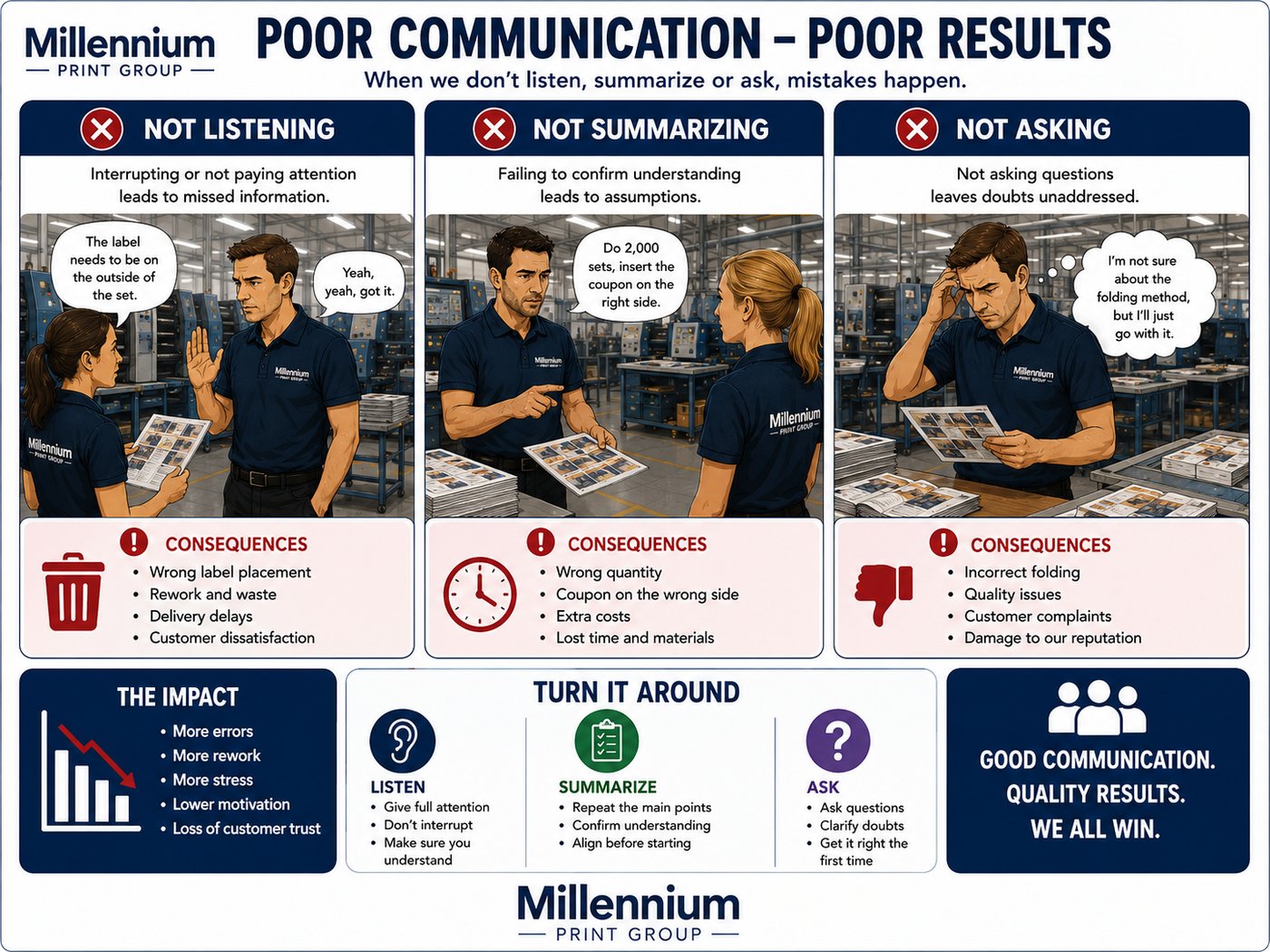
LSD — Visualised
🎯 Translating It to the FloorUse your MMI knowledge in the conversations with your colleagues:
• Ask (L) → Listen to what he/she REALLY says — and make sure you understand.
• Summarise (S) → summarise to check that you truly understand each other. Adapt your behaviour to the COLOUR of the other person — for example: a RED person needs a fast, to-the-point answer · BLUE a structured summary · for YELLOW it helps to summarise the facts · ORANGE a results-focused summary · PURPLE a trust-focused summary.
• Discover (D) → drill down on content AND language.
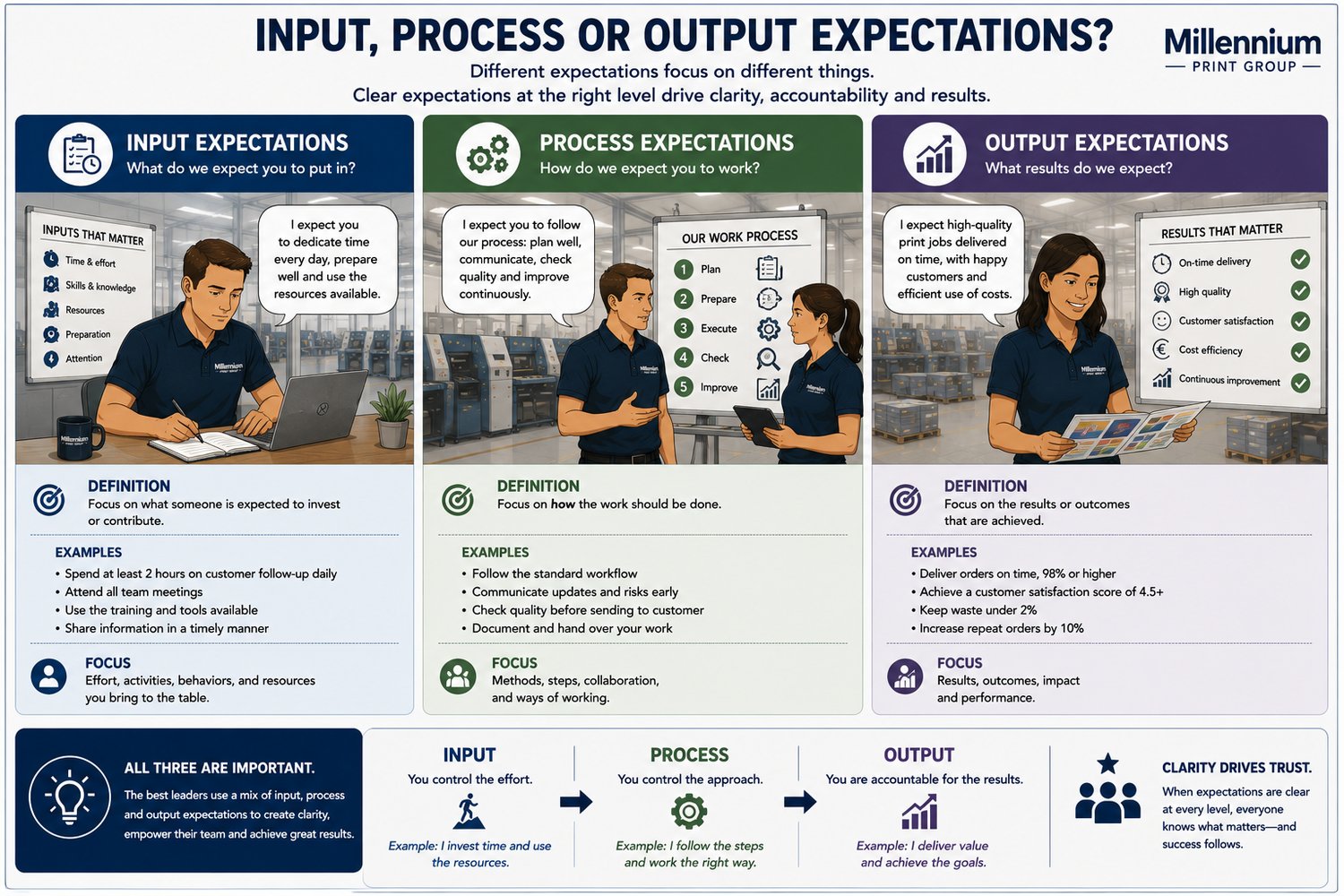
The four IPO levels you sharpen together via LSD: Input · Process · Output · Expectations.
Quick Check — Perception & LSD
Tap the answer you think is right — you'll see feedback instantly.
1. Why can two colleagues hear the same message completely differently?
2. What did the surgeon riddle demonstrate?
3. What is the purpose of Summarising (S) in LSD?
4. Which question is non-suggestive?
Worksheet — LSD on the floor
Your answers are saved in this browser and included in your Training Journey PDF.